Restrepo (2010)
Directed by Sebastian Junger and Tim Hetherington
Restrepo tells the story of a platoon's fifteen month deployment in Afghanistan's Korengal Valley, which was considered at the time to be the deadliest place on earth.
The film begins with footage shot by one of the soldier's as they were getting ready for deployment. The soldier is PFC Restrepo, a field medic who is killed in a firefight in the first fifteen minutes of the film. The platoon later captures a Taliban strategic point and builds an observation post named OP Restrepo in his memory. The film then expertly shows the dichotomy of the battle against the Taliban. The platoon would spend days doing nothing, and then insurgents would appear and the would be engaged in deadly firefights.
Aided by regularly interspersed interviews with the soldiers, the film gives a very raw and emotional look into the platoon's daily battle against the Taliban, both militarily and culturally. Through Junger and Hetherington's skilled filming, the experience of watching the film is transcended into becoming part of the film.
5 out of 5 stars
Viewed May 2, 2012
Warning! This blog may contain film spoilers!
Showing posts with label Cinema Verite. Show all posts
Wednesday, May 2, 2012
Tuesday, February 7, 2012
Crisis: Behind a Presidential Commitment
Crisis: Behind a Presidential Commitment (1963)
Produced by: Robert Drew
Crisis brings Drew Associates and the cinema verite audience back to a family featured in two of their earlier films: the Kennedy family. The focus however is on Attorney General Robert
Kennedy as he faces off against Governor George Wallace of Alabama over the issue of university integration. A federal court order required Governor Wallace to permit black students to enroll at the University of Alabama at Tuscaloosa, but Wallace has no intention of letting them enroll. Wallace sees the court order as a violation of states' rights and threatens to physically block the students from enrolling. The situation is volatile and Kennedy seeks the advice of his brother the President. A plan is devised to attempt to reason with Wallace, but when that fails President Kennedy must send in the National Guard to convince Wallace to leave the campus. President Kennedy's decision is a difficult one, because fully backing integration could further alienate the conservative south, but he makes it anyway and ends the film with a rousing speech about civil rights and equality.
Crisis provides an intriguing and intimate look into the life of President Kennedy and his brother Robert in a circumstance much different from that of Primary. The pressures of his office show on President Kennedy's face, especially during one of the most surprising scenes: a meeting between President Kennedy and his top advisers in the oval office. Another interesting and equally talked about scene is when Robert's daughter speaks on the phone with one of the Assistant Attorney Generals who had been sent to Alabama. By pure luck, the filmmakers were present at both locations and filmed both sides of the conversation, which turned into the first phone conversation in a documentary to be parallel edited.
4 out of 5 stars
Viewed February 1, 2012
Produced by: Robert Drew
Crisis brings Drew Associates and the cinema verite audience back to a family featured in two of their earlier films: the Kennedy family. The focus however is on Attorney General Robert
Crisis provides an intriguing and intimate look into the life of President Kennedy and his brother Robert in a circumstance much different from that of Primary. The pressures of his office show on President Kennedy's face, especially during one of the most surprising scenes: a meeting between President Kennedy and his top advisers in the oval office. Another interesting and equally talked about scene is when Robert's daughter speaks on the phone with one of the Assistant Attorney Generals who had been sent to Alabama. By pure luck, the filmmakers were present at both locations and filmed both sides of the conversation, which turned into the first phone conversation in a documentary to be parallel edited.
4 out of 5 stars
Viewed February 1, 2012
Labels:
4 Stars,
Cinema Verite,
Crisis,
Drew,
Film,
Movie Review
Saturday, January 28, 2012
Welcome!
Welcome to Rob Loves Movies!
An important part of being a filmmaker/lover is to not only watch films, but to also engage in thought provoking discussions of said films with fellow filmmakers/lovers.
This is my goal:
Post critical as well as personal reviews for every film I watch.
Too ambitious?
I hope not, and I hope you'll find my reviews enjoyable, and possibly even discover some films you've never heard of!
To start off, here's a review of the most recent film I've seen: Primary.
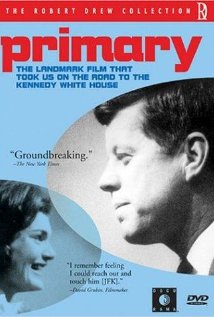
Primary (1960)
Written and Directed by Robert Drew.
Primary is a documentary that follows presidential hopefuls John F. Kennedy and Hubert Humphrey during Wisconsin's Democratic primary. The most striking aspects of the film, to its original audiences at least, are the uninhibited camera movements and the genuine capturing of intimate moments. Both of these aspects are direct results of the then-emerging cinema verite style and technological advancements that produced hand-held and mostly quiet film cameras.
The most intriguing scenes in the film include Humphrey taking a nap during a car ride between cities, a long take of Kennedy walking through a crowd before giving a campaign speech, and both candidates waiting for the results with their friends and family. Unfortunately the hour long film becomes arduous to watch in several places, especially a montage of feet seen under voting booths.
To an audience unfamiliar with the cinema verite style of documentary filmmaking Primary was most definitely an exhilarating and unique window into the lives of presidential hopefuls. Along with the rest of Robert Drew's documentaries from this time, Primary was a groundbreaking film and has impacted filmmaking, both documentary and narrative, ever since.
An important part of being a filmmaker/lover is to not only watch films, but to also engage in thought provoking discussions of said films with fellow filmmakers/lovers.
This is my goal:
Post critical as well as personal reviews for every film I watch.
Too ambitious?
I hope not, and I hope you'll find my reviews enjoyable, and possibly even discover some films you've never heard of!
To start off, here's a review of the most recent film I've seen: Primary.
Primary (1960)
Written and Directed by Robert Drew.
Primary is a documentary that follows presidential hopefuls John F. Kennedy and Hubert Humphrey during Wisconsin's Democratic primary. The most striking aspects of the film, to its original audiences at least, are the uninhibited camera movements and the genuine capturing of intimate moments. Both of these aspects are direct results of the then-emerging cinema verite style and technological advancements that produced hand-held and mostly quiet film cameras.The most intriguing scenes in the film include Humphrey taking a nap during a car ride between cities, a long take of Kennedy walking through a crowd before giving a campaign speech, and both candidates waiting for the results with their friends and family. Unfortunately the hour long film becomes arduous to watch in several places, especially a montage of feet seen under voting booths.
To an audience unfamiliar with the cinema verite style of documentary filmmaking Primary was most definitely an exhilarating and unique window into the lives of presidential hopefuls. Along with the rest of Robert Drew's documentaries from this time, Primary was a groundbreaking film and has impacted filmmaking, both documentary and narrative, ever since.
Subscribe to:
Posts (Atom)