Warning! This blog may contain film spoilers!
Showing posts with label Film. Show all posts

Friday, May 4, 2012

The Avengers, Part 2

The Avengers (2012)
Directed by Joss Whedon

So I just got home from seeing The Avengers with the girlfriend.  Don't worry, I won't be posting any spoilers in my review.

We arrived at the theater around 9 pm.  We waited in line outside the theater for an hour while Lockout finished its last show of the night before being seated.  The next two hours passed quickly as the theater filled to capacity.  Then the commercials and trailers began, only three of which are worth mentioning.  First was the final Dark Knight Rises trailer, which commanded the most silence I have ever witnessed while watching a trailer in the theater.  Second was one of the original trailers for Prometheus, not quite as interesting as the most recent international trailer, but still amazing.  Lastly was an Amazing Spiderman trailer which I had not seen before.  And then the Avengers assembled.

To be honest, I was less than excited about this film to begin with.  I was skeptical of how well Joss would meld all of the previous films, all of the characters, and all of the mythologies into one cohesive and engaging story.  While the film was by no means perfect,  I am definitely convinced that my doubts were unfounded.

So what did I like the most about it, you ask?
The effects were awesome, there was enough action to fill ten blog posts, and ScarJo is HOT (and luckily not Jossed, but I'm not saying who is).  But my absolute favorite part of the film is something that Joss is know best for: character interactions.  Not the times when everybody is together delivering exposition to the audience though.  The moments that, in my opinion, make the movie more than just a summer tentpole actiony popcorn flick are the small moments, the one-liners between characters at the most random and unexpected times which truly reveal the characters' identities, even as the end of the world is potentially swirling around them.  The moments are quirky, original, and last only a few seconds each, but they make the characters immensely  relateable, which is quite an accomplishment when the characters are superheros battling aliens who have come to enslave the earth.

I have to be a little nitpicky though.
Ironically, since my favorite part of the film was some of its dialogue, the part that disappointed me the most was also some of the dialogue.  Without going into specifics, majority of the dialogue in the beginning of the film is overly expository.  Granted, there is a lot of information and backstory to be assimilated, but I feel that it could have been worked in to be less obvious.  Also, a few of the actors seemed to do less-than-stellar line readings for  parts of the film.  Overall the dialogue was well delivered, but there were a few times where the line readings were distractingly stiff.  Lastly, the 3D conversion didn't do much for me.  I don't know if it was just me, the projector, or just a bad conversion, but at times the images didn't fully line up, especially on the sides of the frame.  It didn't ruin the film for me, but it pulled me out of the moment.  The main point of 3D is to enhance the experience, but all too often it becomes yet another distraction.

The Final Word:
Go see it.  It is a fun, action packed film, perfect for viewing in a crowded theater, although if you didn't see it tonight you definitely missed out on a good experience.

4.5 out of 5 stars
Viewed 12:01 am, May 4, 2012

Wednesday, May 2, 2012

Restrepo

Restrepo (2010)
Directed by Sebastian Junger and Tim Hetherington

Restrepo tells the story of a platoon's fifteen month deployment in Afghanistan's Korengal Valley, which was considered at the time to be the deadliest place on earth.
The film begins with footage shot by one of the soldier's as they were getting ready for deployment.  The soldier is PFC Restrepo, a field medic who is killed in a firefight in the first fifteen minutes of the film.  The platoon later captures a Taliban strategic point and builds an observation post named OP Restrepo in his memory.  The film then expertly shows the dichotomy of the battle against the Taliban.  The platoon would spend days doing nothing, and then insurgents would appear and the would be engaged in deadly firefights.
Aided by regularly interspersed interviews with the soldiers, the film gives a very raw and emotional look into the platoon's daily battle against the Taliban, both militarily and culturally.  Through Junger and Hetherington's skilled filming, the experience of watching the film is transcended into becoming part of the film.

5 out of 5 stars
Viewed May 2, 2012

Sunday, April 29, 2012

The Avengers

The Avengers (2012)
Directed by Joss Whedon

Waiting (not as) anxiously (as my girlfriend) for the midnight premier.
We bought tickets about a year ago.
Will it be awesome?
Will it be another $250 million flop?
Will ScarJo get Jossed?
Will Loki look less ridiculous?
Will I fall asleep 2/3 of the way through?
Only time will tell!

What about The Avengers excites you the most?
Sound off below!

To be viewed May 4, 2012.

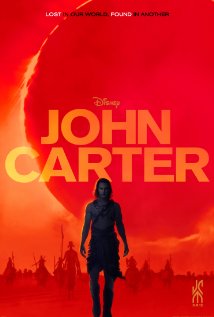
John Carter

John Carter (2012)
Directed by: Andrew Stanton

Let's begin with how huge of a box office bomb John Carter turned out to be.  For a film produced on a $250 million budget, with at least $100 million spent on P&A, and countless millions on distribution, to have not yet reached $70 million domestically after seven weeks is just sad.  Even when accounting for its $200 million overseas gross, Disney expects to lose at least $200 million.  I enjoyed most of the film, but as a filmmaker I can't comprehend how so many people could let something go so wrong.  Rich Ross is definitely partially to blame, but he probably shouldn't have been the only person forced to resign.
To me, the scariest thing about this film is the fact that mistakes like this are allowed to happen.  How can an industry survive that produces John Carter, Mars Needs Moms, Green Lantern, Hugo (which I absolutely love, but still lost almost $100 million), and many more big budget films that flop?  Yes the industry is buoyed by the Harry Potters and the Hunger Games, as well as low budget and modestly profitable films, DVD sales, rentals, merchandizing, licensing, etc., but the primary function of films has been, and in my opinion should always be, its theatrical release.  Yes that viewpoint is archaic and unrealistic, but the cinema is a place for dreaming, whether that be of faraway lands, wizards, figurative chess matches, or the human condition.

</rant>

On a different note, as soon as my girlfriend figured out and whispered to me that Willem Dafoe was voicing Tars Tarkas, all I could think about was the terrible, awful, sickening, yet beautifully made film from Lars von Trier.  If you don't know what I'm talking about, DO NOT go look it up.  Please.  I'm begging you.  It's for your own good.

2.5 out of 5 stars
Viewed March 15, 2012

This Means War

This Means War (2012)
Directed by: McG

I usually don't like the glossy, plastic emotion, fake explosion feel of the films of McG et al, so This Means War was a pleasant surprise.  The explosions still looked fake and the premise of a woman falling in love with two best friends isn't exactly my cup of tea, but the film works due to the great onscreen chemistry between all three of the leads.
War begins with Chris Pine and Tom Hardy's characters, FDR and Tuck, on a mission in Hong Kong to prevent a stereotypical baddie from getting his hands on some super powerful weapon.  The mission goes awry and the baddie escapes, but his little brother gets killed.  The baddie vows to avenge his brother's death.  This inciting action gets FDR and Tuck benched, forcing them to reflect upon their lives.   FDR the perennial one-night-stand womanizer convinces straight laced divorcee Tuck to join a dating website where he meets the beautiful yet boring Lauren (Reese Witherspoon).  Their first date goes well and they decide to have another.  However, Lauren coincidentally  runs into FDR at the video store right after leaving her date with Tuck.  Lauren is put off by FDR's flirting style, but she agrees to go on a date with him to get him to stop causing havoc at her job.  Lauren is morally opposed to dating two men at once, but she quickly gets past that with help from the sage advise from her sex-crazy and soaked in alcohol friend Trish (Chelsea Handler).  Surprisingly (or not), FDR and Tuck quickly realize that they are dating the same woman.  Rather than fight over her, they agree to not tell her that they know each other and to let her decide who to continue to date.  This works for a little while, but they begin to use their spy skills to try to influence Lauren's decision.  This part of the film is my favorite, as the competition lets the chemistry between the actors shine.  But the second act is almost over, which means the baddie has to reappear with his evil plot to kill FDR and Tuck.  Tuck is on a date with Lauren at the time, and FDR has to warn them that the baddie is after them.  Unfortunately this requires informing Lauren that they are best friends (and spies), which is understandingly a surprise for her.  She leaves as FDR and Tuck have an epic fight that destroys the inside of the restaurant while the baddie conveniently kidnaps Lauren and Trish.  FDR and Tuck must now work together to save Lauren, which they do, and narrowly avoid driving over the edge of an unfinished stack interchange (look it up on wikipedia).  Lauren chooses FDR, FDR and Tuck make amends, Tuck's ex-wife discovers that he was distant during their marriage because he was a spy, they get remarried, and the baddie dies in a massively fake-looking explosion.
Unlike its fellow recently released spy film cousin Tinker, Tailor, Soldier, Spy, War has zero aspirations of receiving a golden statuette.  If Tinker is an infinitely layered cake of complex tastes that have to be appreciated slowly with the entirety of the palette, then War is a box of Twinkies.  I like Twinkies, but I start to get sick after downing the first few.

3.5 out of 5 stars
Viewed February 18, 2012

Tuesday, March 20, 2012

Star Wars Episode One: The Phantom Menace in 3D

Star Wars Episode One: The Phantom Menace in 3D (2012)
Directed by: George Lucas

Phantom Menace was first released on May 19, 1999, three days after my ninth birthday. Obviously I had a Star Wars themed birthday that year, the main event of which was seeing Phantom Menace on opening night (my hometown theater didn't do midnight showings at the time, plus I was nine...) I don't remember anything about the film from that first viewing, but I do remember the wondrous feeling of sitting in the crowded theater, waiting to experience something magical. Of course at the time we didn't know that Lucas was actually playing a terribly evil prank on the world... But the point is that I have a fond memory of seeing the film, which happens to be my earliest memory of seeing a film in the theater. Thus in honor of this memory I attended the midnight showing of the 3D re-release. Once again I was disappointed by Lucas' abomination, and since everyone knows how terrible Phantom Menace is, I won't repeat every review ever written about the film.
We did get pretty cool custom Star Wars 3D glasses. So that was neat.

1 out of 5 stars
Viewed February 10, 2012

Tuesday, February 7, 2012

Crisis: Behind a Presidential Commitment

Crisis: Behind a Presidential Commitment (1963)
Produced by: Robert Drew

Crisis brings Drew Associates and the cinema verite audience back to a family featured in two of their earlier films: the Kennedy family. The focus however is on Attorney General Robert Kennedy as he faces off against Governor George Wallace of Alabama over the issue of university integration. A federal court order required Governor Wallace to permit black students to enroll at the University of Alabama at Tuscaloosa, but Wallace has no intention of letting them enroll. Wallace sees the court order as a violation of states' rights and threatens to physically block the students from enrolling. The situation is volatile and Kennedy seeks the advice of his brother the President. A plan is devised to attempt to reason with Wallace, but when that fails President Kennedy must send in the National Guard to convince Wallace to leave the campus. President Kennedy's decision is a difficult one, because fully backing integration could further alienate the conservative south, but he makes it anyway and ends the film with a rousing speech about civil rights and equality.
Crisis provides an intriguing and intimate look into the life of President Kennedy and his brother Robert in a circumstance much different from that of Primary. The pressures of his office show on President Kennedy's face, especially during one of the most surprising scenes: a meeting between President Kennedy and his top advisers in the oval office. Another interesting and equally talked about scene is when Robert's daughter speaks on the phone with one of the Assistant Attorney Generals who had been sent to Alabama. By pure luck, the filmmakers were present at both locations and filmed both sides of the conversation, which turned into the first phone conversation in a documentary to be parallel edited.

4 out of 5 stars
Viewed February 1, 2012

Saturday, January 28, 2012

Welcome!

Welcome to Rob Loves Movies!
An important part of being a filmmaker/lover is to not only watch films, but to also engage in thought provoking discussions of said films with fellow filmmakers/lovers.
This is my goal:
Post critical as well as personal reviews for every film I watch.
Too ambitious?
I hope not, and I hope you'll find my reviews enjoyable, and possibly even discover some films you've never heard of!

To start off, here's a review of the most recent film I've seen: Primary.

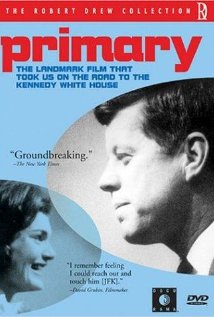
Primary (1960)
Written and Directed by Robert Drew.
Primary is a documentary that follows presidential hopefuls John F. Kennedy and Hubert Humphrey during Wisconsin's Democratic primary. The most striking aspects of the film, to its original audiences at least, are the uninhibited camera movements and the genuine capturing of intimate moments. Both of these aspects are direct results of the then-emerging cinema verite style and technological advancements that produced hand-held and mostly quiet film cameras.
The most intriguing scenes in the film include Humphrey taking a nap during a car ride between cities, a long take of Kennedy walking through a crowd before giving a campaign speech, and both candidates waiting for the results with their friends and family. Unfortunately the hour long film becomes arduous to watch in several places, especially a montage of feet seen under voting booths.
To an audience unfamiliar with the cinema verite style of documentary filmmaking Primary was most definitely an exhilarating and unique window into the lives of presidential hopefuls. Along with the rest of Robert Drew's documentaries from this time, Primary was a groundbreaking film and has impacted filmmaking, both documentary and narrative, ever since.